
Hear from Our Customers
Clean gutters mean water flows away from your house instead of into it. That’s the difference between a dry basement and a flooded one, between intact fascia boards and rotted wood that needs replacing.
In Metcalf and the surrounding Holliston area, you’re dealing with heavy spring rains, summer thunderstorms, fall leaf accumulation, and winter ice. Each season dumps something different into your gutters. When those gutters can’t drain properly, water backs up under shingles, overflows onto siding, and pools around your foundation.
Foundation repairs run upwards of $30,000 according to recent data. A single gutter cleaning costs a fraction of that. The math isn’t complicated—you’re either paying for maintenance now or repairs later. Most homeowners in Massachusetts need their gutters cleaned at least twice a year, and properties with heavy tree coverage need it three to four times annually.
Clarita’s Cleaning has spent more than ten years cleaning gutters across the MetroWest area. We’re a family-run operation, which means we’re not sending different crews every time or rushing through jobs to hit quotas.
You’re getting the same attention to detail on every visit. We use eco-friendly, non-toxic products because we know you have kids, pets, and plants around your property. Our cleaners don’t miss sections, don’t skip downspouts, and don’t leave debris in your yard.
Metcalf homeowners deal with specific challenges—dense tree coverage, older homes with complex rooflines, and the full force of New England weather. We’ve seen what happens when gutters aren’t maintained properly here, and we know exactly what needs to be done to prevent it.
We start with a visual inspection of your entire gutter system. We’re looking for clogs, but also for damage, sagging sections, loose fasteners, and any signs that water isn’t draining correctly.
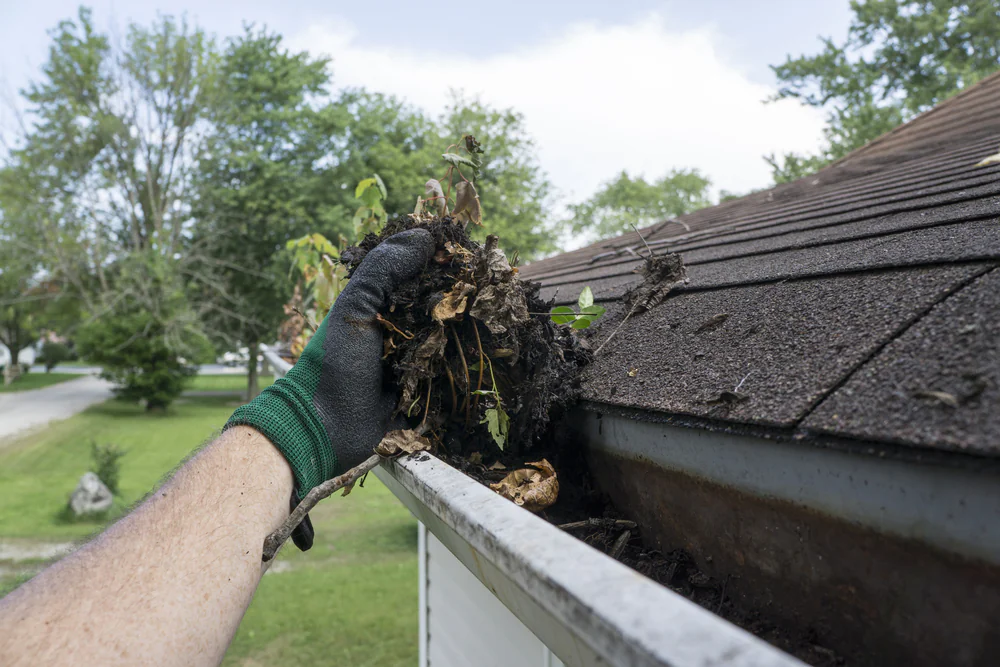
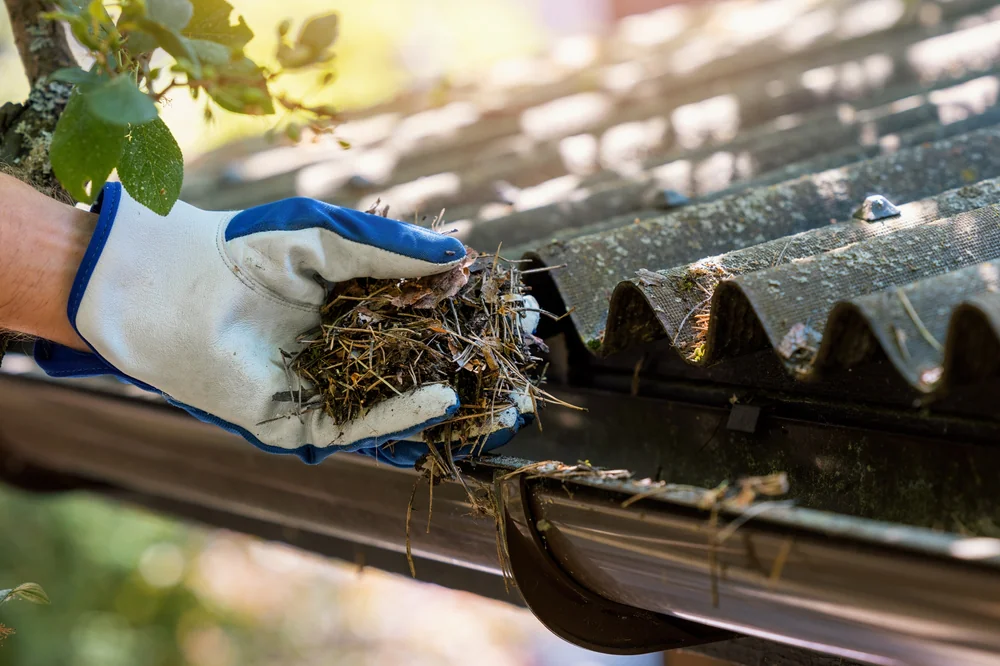
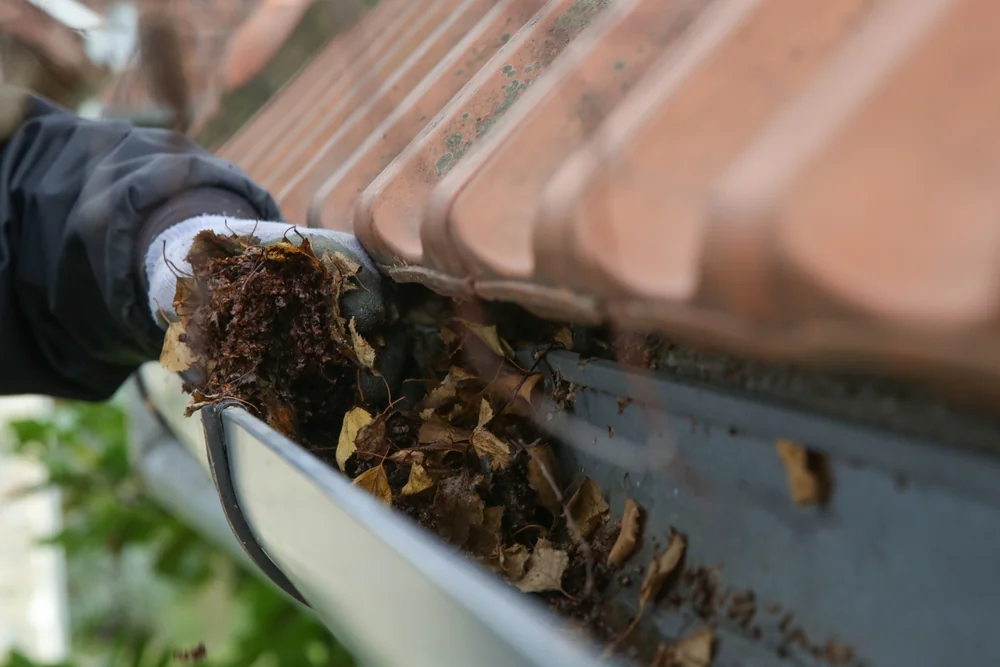
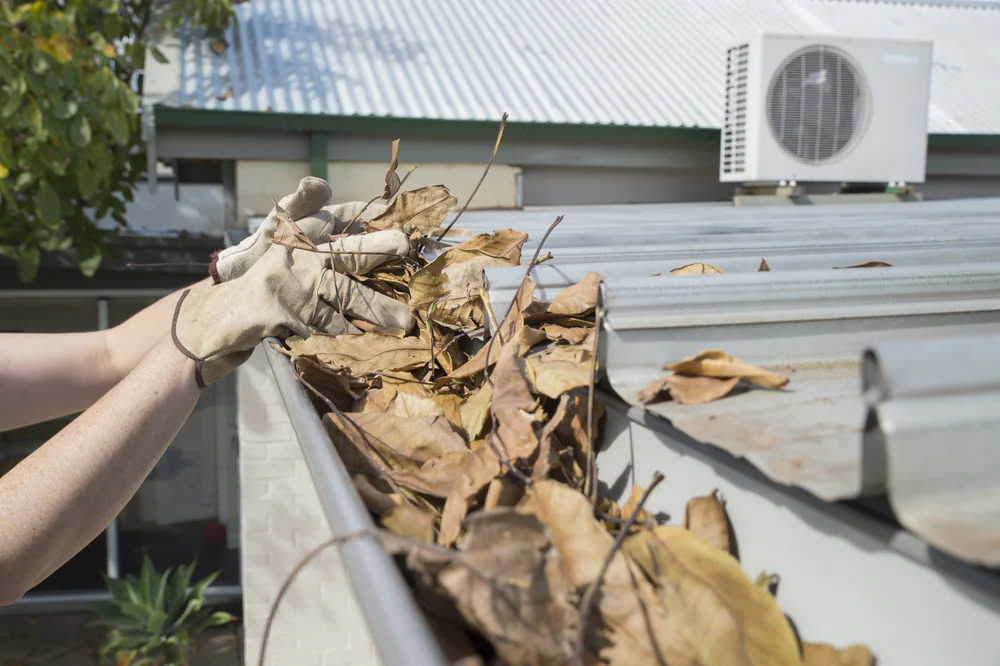
Then we remove all debris by hand—leaves, twigs, shingle grit, whatever’s accumulated. We don’t just scoop out the visible stuff and call it done. We clear every section, including the corners and joints where clogs typically form.
Next comes downspout clearance. A clean gutter with a clogged downspout still can’t drain. We make sure water can flow all the way through the system and away from your foundation. If we find a stubborn blockage, we clear it—no extra charge for doing the job right.
We also remove roof debris that could wash into your gutters during the next rain. Finally, we do a water test to confirm everything drains properly, and we clean up any mess we’ve made. You shouldn’t have to rake up after us.
Ready to get started?
Our gutter cleaning includes downspout clearance, roof debris removal, and a full inspection of your gutter system. We’re checking for proper pitch, secure fasteners, and any damage that could cause problems down the line.
If you’re interested in gutter guard installation, we can handle that too. Guards won’t eliminate maintenance entirely, but they reduce how often you need service and make each cleaning faster. For homes in Metcalf with heavy oak or maple coverage, guards can cut your annual cleanings from four times to twice.
We also maintain seamless gutters, which are common in newer construction around Holliston. These systems have fewer joints, which means fewer potential leak points—but they still need regular cleaning to function properly.
Massachusetts winters are hard on gutters. Ice dam prevention starts with clean gutters in late fall, before the first snow. When gutters are clogged and water can’t drain, it freezes in place and creates the conditions for ice dams to form. Those ice dams force water under your shingles and into your walls. We’ve seen the damage firsthand, and it’s always worse than homeowners expect.
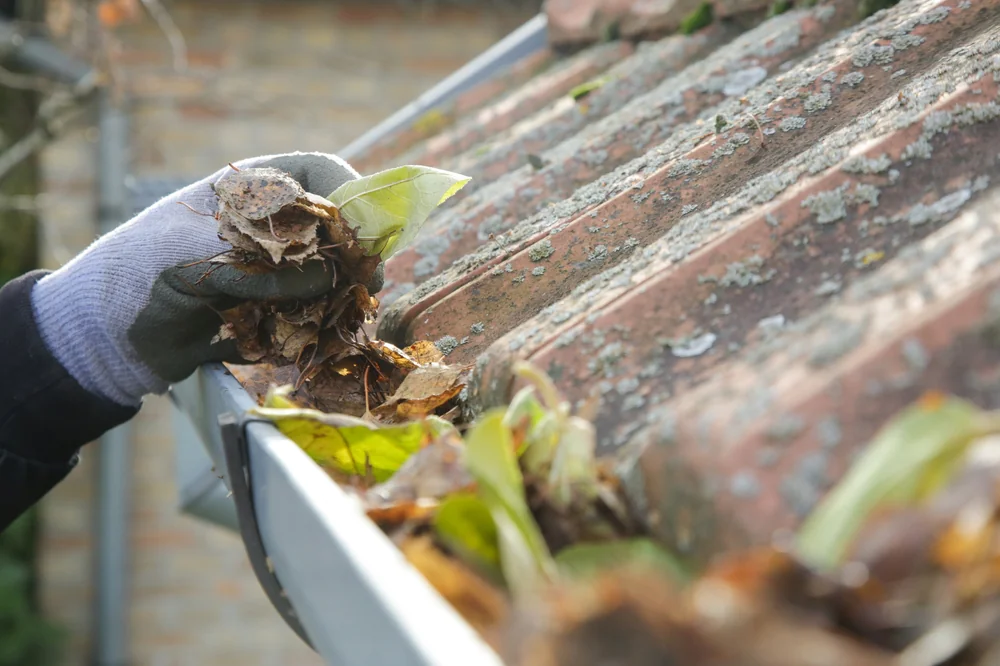
Most properties in Metcalf need gutter cleaning twice a year—once in late spring after pollen season and once in late fall after leaves drop. That’s the baseline for homes with moderate tree coverage.
If your property has dense tree coverage, especially oaks or maples, you’re looking at three to four cleanings annually. Trees drop different things throughout the year—pollen in spring, seed pods in early summer, leaves in fall, and twigs during winter storms. All of it ends up in your gutters.
The real answer depends on your specific property. If you’re seeing overflow during rainstorms, finding seedlings growing in your gutters, or noticing water stains on your fascia, you’re waiting too long between cleanings.
Yes, and it happens more often than most homeowners realize. Your gutters exist to move water away from your house. When they’re clogged, thousands of gallons of water pour over the sides and pool around your foundation instead.
That water saturates the soil, creates hydrostatic pressure against foundation walls, and finds its way into basements and crawl spaces. Over time, it causes cracks, settling, and structural issues that cost tens of thousands to repair.
Foundation damage doesn’t happen overnight, which is why homeowners often don’t connect it to their gutters. But if you’re getting water in your basement or seeing cracks in your foundation walls, clogged gutters are one of the first things to check. Prevention is straightforward—keep your gutters clean and make sure downspouts direct water at least six feet away from your foundation.
Ice dams form when heat escaping from your attic melts snow on your roof. That melted water runs down to the cold eaves and refreezes, creating a ridge of ice. Once that ridge forms, water backs up behind it and gets forced under your shingles.
Clogged gutters make this worse in two ways. First, debris in your gutters holds moisture against your roof line, which increases the chance of ice formation. Second, when gutters are full of frozen debris, there’s nowhere for melting snow to drain, so it backs up faster.
Clean gutters won’t prevent ice dams entirely—that requires proper attic insulation and ventilation—but they’re part of the solution. Getting your gutters cleaned in October or early November, before the first snow, gives you the best chance of avoiding ice dam damage during winter. Massachusetts winters are unpredictable, and we’ve seen significant ice dam problems as recently as 2010-2011 when the state recorded nearly 100 roof collapses from snow accumulation.
Yes, and most people underestimate the risk. You’re moving a heavy ladder around your property, setting it up on uneven ground, climbing 20 to 30 feet in the air, and working with wet, slippery debris. You also have to move that ladder every six feet or so to reach the next section.
Ladder-related injuries send thousands of people to the emergency room every year. Many of those injuries happen during routine home maintenance like gutter cleaning. The risk increases if you have a multi-story home, a sloped yard, or gutters that are difficult to reach.
Professional gutter cleaners have the right equipment, safety training, and experience to do the job without the risk. We’re insured, we’re used to working at height, and we’re not trying to balance on a ladder while scooping out wet leaves. For most homeowners, the cost of professional service is worth not spending an afternoon on a ladder.
No, but they reduce how often you need service. Gutter guards block large debris like leaves and twigs, but smaller particles—shingle grit, pine needles, seed pods, pollen—still get through and accumulate over time.
Guards also don’t prevent debris from piling up on top of the system. If you have overhanging branches, leaves will stack up on the guards themselves and block water from entering the gutters. You’ll still need to clear that debris periodically.
The benefit of gutter guards is that they extend the time between cleanings. Instead of cleaning four times a year, you might only need service twice. For properties with heavy tree coverage in Metcalf, that’s a significant reduction in maintenance. But guards aren’t a set-it-and-forget-it solution—they’re a tool that makes gutter maintenance easier, not unnecessary.
Debris keeps accumulating, and the problems compound. First, your gutters stop draining properly, which means water overflows during every rainstorm. That overflow damages your fascia boards, soffit, and siding. It also saturates the ground around your foundation.
Eventually, the weight of wet debris causes gutters to sag or pull away from your roofline. You’ll start seeing gaps between the gutter and fascia, which allows water to run behind the gutter and rot the wood. Repairing or replacing damaged fascia and gutters costs significantly more than regular cleaning would have.
In winter, clogged gutters filled with frozen debris create ideal conditions for ice dams. Once an ice dam forms and water gets under your shingles, you’re looking at interior water damage, stained ceilings, and potential mold growth. The longer you wait, the more expensive the fix becomes. Regular maintenance prevents all of this.
Other Services we provide in Metcalf
Ready for a Sparkling Clean Home?
Take the first step towards a cleaner, healthier home. Book your cleaning service with Clarita’s Cleaning today!
Clarita's Cleaning
Company
Support
Useful Links