
Hear from Our Customers
Your siding stops looking dingy. The green streaks on your north-facing wall disappear. That black film on your driveway from winter salt and tire marks—gone.
When pressure washing is done correctly, your property looks maintained instead of neglected. Curb appeal comes back without you spending a weekend on a ladder with a rented machine you’re not sure how to use. If you’ve got an HOA breathing down your neck about exterior maintenance, this handles it.
The difference between DIY and professional work isn’t just speed. It’s knowing which surfaces can handle 3000 PSI and which ones need soft washing at 500. It’s having the right tip, the right distance, and the right cleaning solution so you’re not replacing siding next year because someone blasted it too hard.
We’ve been handling exterior cleaning in the Countryside area for over ten years. We’re a family-owned operation, which means when you call, you’re talking to people who actually do the work—not a call center three states away.
We use eco-friendly, non-toxic products because plenty of our clients have kids, pets, or gardens they don’t want drenched in harsh chemicals. We know how New England weather beats up homes: pollen in spring, humidity and algae in summer, salt and plow spray all winter. We’ve cleaned through all of it.
If you’re comparing companies, here’s what matters: we’re insured, we offer free estimates, and we guarantee the work. If something’s not right, we come back and fix it.
First, we walk your property and identify what needs cleaning and what method works best. Vinyl siding gets treated differently than wood decks. Concrete driveways can handle higher pressure than painted surfaces.
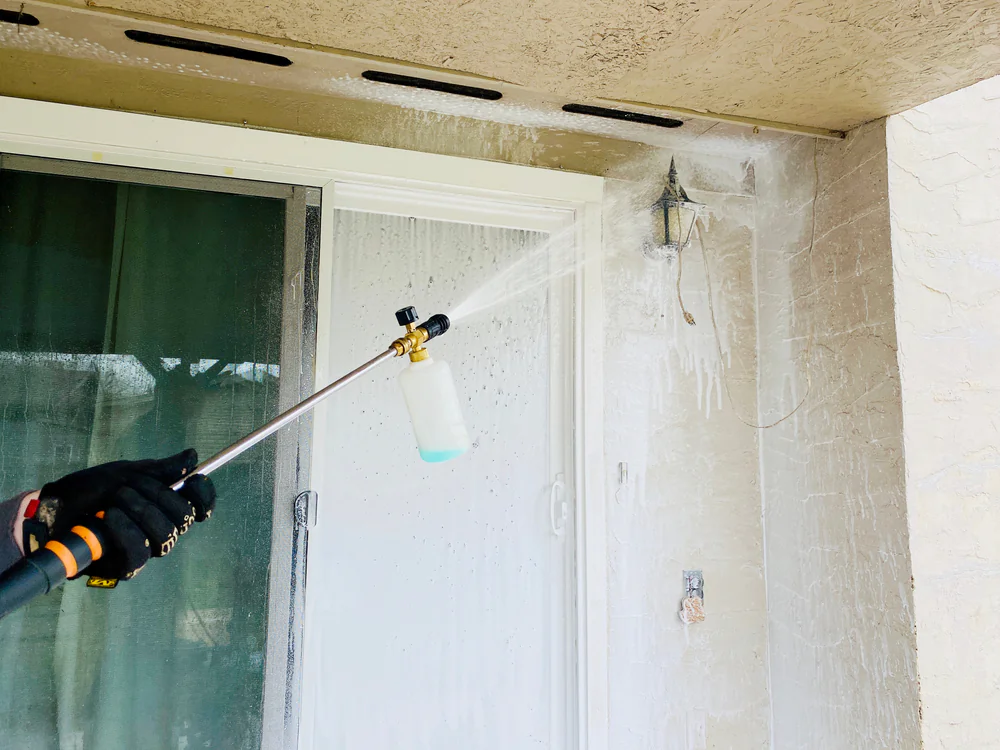
We pre-treat stubborn areas—algae, mold, oil stains—with the right cleaning solution and let it sit. Then we use either pressure washing for hard surfaces like driveways and walkways, or soft washing for more delicate areas like siding, roofs, and fences. Soft washing uses lower pressure and relies on the cleaning solution to do the work, which prevents damage.
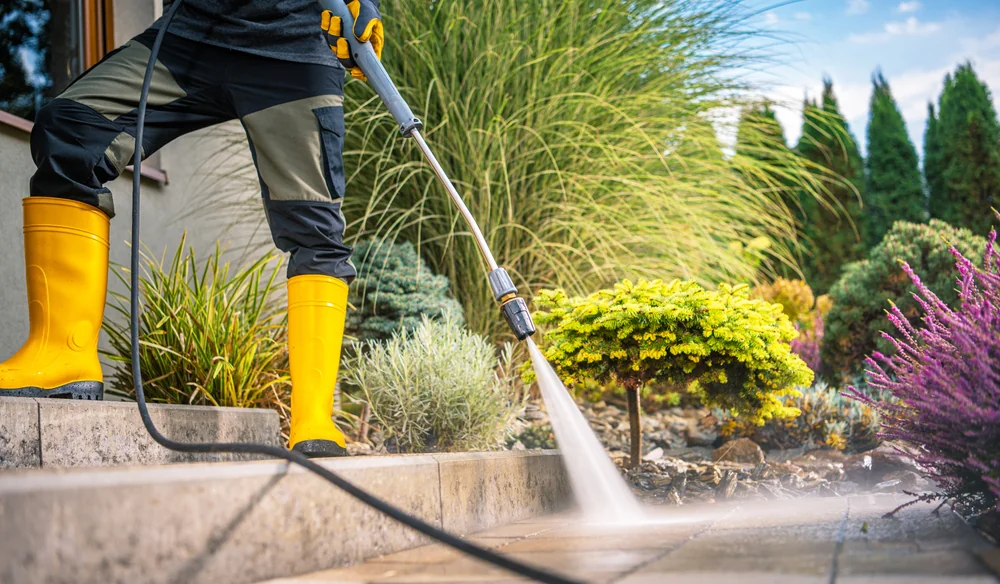
After we’re done, we do a walkthrough with you to make sure everything meets expectations. We also rinse surrounding landscaping so no cleaning solution sits on your plants. The whole process usually takes a few hours depending on the size of your property, and you don’t need to be home the entire time if that’s easier for your schedule.
Ready to get started?
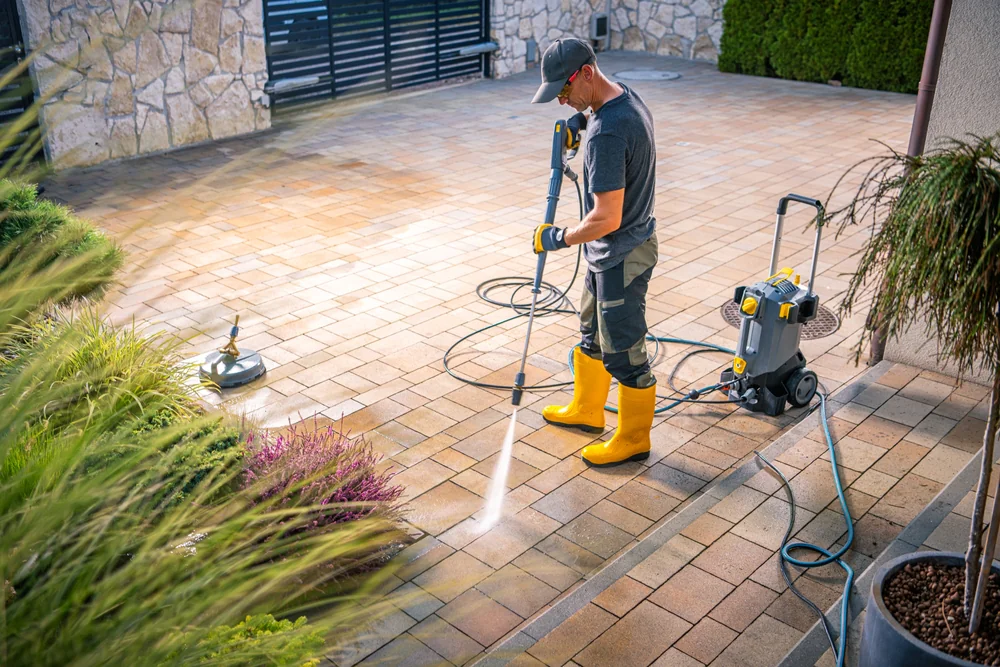
We handle full exterior house washing, which covers siding, trim, soffits, and fascia. Driveways and walkways get pressure washed to remove oil, tire marks, and salt buildup. If you’ve got a deck or fence that’s looking weathered or covered in mildew, we clean and restore those too.
Graffiti removal is available for commercial properties or any surface that’s been tagged. We also offer soft washing for roofs, which is critical in Massachusetts where algae and moss love to grow on shaded shingles. Left alone, that organic growth holds moisture and shortens your roof’s lifespan.
Countryside homes deal with a lot of environmental wear. You’re close enough to the coast that salt air accelerates grime buildup, and the tree cover in many neighborhoods means constant pollen, sap, and shade-loving algae. Regular pressure washing isn’t just cosmetic—it’s maintenance that prevents wood rot, paint failure, and expensive repairs down the line. Most homeowners in this area benefit from annual cleaning, though high-traffic or shaded areas might need attention twice a year.

Pressure washing uses high PSI—usually between 2000 and 3000—to blast away dirt, stains, and buildup from hard surfaces like concrete, brick, and stone. It’s fast and effective for driveways, sidewalks, and patios where you need serious cleaning power.
Soft washing uses much lower pressure, typically under 500 PSI, and relies on specialized cleaning solutions to break down algae, mold, mildew, and dirt. It’s what you use on siding, roofs, wood decks, and painted surfaces where high pressure would cause damage—cracking vinyl, stripping paint, or splintering wood.
Most properties need both methods depending on what’s being cleaned. A good pressure washing company knows which technique to use where. If someone shows up and tries to blast your vinyl siding at 3000 PSI, that’s a red flag. If they soft wash your oil-stained driveway, it won’t come clean. The right approach depends on the surface, and that’s where experience matters.
Most homes in Countryside benefit from pressure washing once a year, ideally in late spring or early summer after pollen season but before the heat and humidity ramp up algae growth. If your house has a lot of shade, sits near trees, or faces north where sunlight doesn’t hit, you might need it twice a year.
Massachusetts weather is tough on exteriors. Winter leaves behind salt residue that traps moisture and feeds staining. Spring dumps pollen everywhere. Summer humidity encourages mold and algae, especially on shaded siding. Fall brings leaves and organic debris that stain if left sitting.
If you’re seeing green or black streaks, your house is overdue. If your HOA sent a letter, definitely overdue. But even if it looks okay, regular cleaning prevents buildup from becoming a bigger problem. It’s a lot easier to maintain a clean surface than to restore one that’s been neglected for years. Annual cleaning also gives you a chance to spot small issues—loose siding, failing caulk, early wood rot—before they turn into expensive repairs.
Not if it’s done correctly. Damage happens when someone uses too much pressure, the wrong nozzle, or stands too close to the surface. Vinyl siding can crack or get water forced behind it. Wood can splinter. Paint can peel. That’s why technique and experience matter.
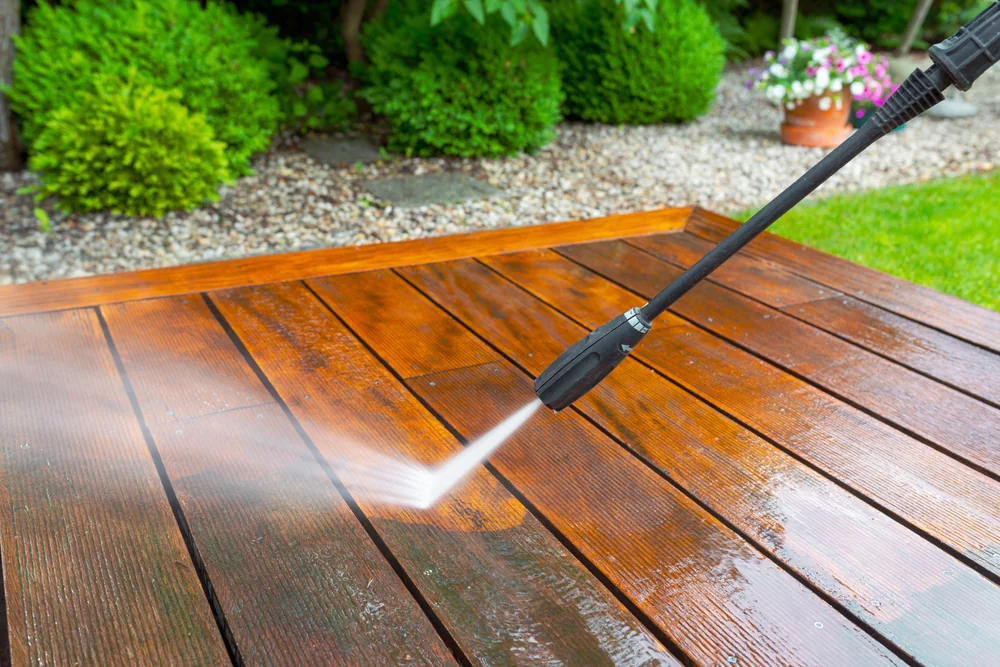
We use soft washing on siding, which keeps pressure low and lets the cleaning solution do the work. For wood decks, we adjust pressure based on the wood type and condition—old, weathered wood gets treated more gently than newer composite materials. We also keep the nozzle at the right distance and angle to avoid gouging or streaking.
The risk with DIY pressure washing is that rental equipment is often too powerful for residential use, and if you’ve never done it before, it’s easy to make a mistake that costs hundreds or thousands to fix. We’ve seen homeowners strip paint off their trim, crack siding, or etch concrete because they didn’t know what they were doing. Professional equipment has adjustable settings, and professional operators know how to use them. If you’re worried about damage, ask any company you’re considering if they’re insured and what their process is for different surfaces.
Cost depends on the size of your property, what needs cleaning, and how much buildup there is. A typical single-family home exterior wash usually runs between $200 and $500. Driveways, decks, and additional surfaces add to that. Heavily stained or neglected properties take more time and product, which increases the price.
We offer free estimates, so you’ll know the cost upfront before any work starts. No hidden fees, no surprise charges. If you want just your driveway cleaned, we’ll quote that. If you want the full exterior plus deck and walkways, we’ll quote that too.
Some companies charge by square footage, others by the hour, and some offer package pricing. We base our pricing on what actually needs to be done and how long it’ll take. If you’re comparing quotes, make sure you’re comparing the same scope of work—some companies lowball the estimate and then upsell once they’re on site. We don’t do that. What we quote is what you pay, and if something changes, we discuss it with you first.
Yes, as long as we take precautions. We pre-wet plants and landscaping before we start, use eco-friendly and non-toxic cleaning solutions, and rinse everything thoroughly afterward. The goal is to clean your house without killing your garden.
Most professional-grade cleaning solutions are biodegradable and safe for plants when diluted and rinsed properly. The bigger risk is actually the pressure itself—high-pressure water can damage delicate plants or tear up mulch. We’re careful around flower beds, shrubs, and ground cover.
If you’ve got particularly sensitive plants or a vegetable garden close to where we’re working, let us know ahead of time. We can cover them with tarps or adjust our approach. We’ve been doing this long enough to know that your landscaping matters just as much as your siding. A clean house isn’t worth much if your plants are dead. If a company doesn’t mention anything about protecting your landscaping during the estimate, that’s worth asking about.
Most oil stains, yes. How well they come out depends on how old the stain is and how deep it’s soaked into the concrete. Fresh oil stains are easier to remove than ones that have been sitting for months or years.
We use a degreasing solution designed for concrete, let it penetrate the stain, and then pressure wash at high heat and pressure to lift it out. Newer stains usually come out completely. Older, set-in stains often lighten significantly but might leave a faint shadow. If the oil has soaked deep into porous concrete, there’s a limit to what any cleaning method can do.
Asphalt driveways are trickier because oil can actually break down the asphalt binder, and aggressive cleaning can make it worse. We adjust our approach based on the surface type. If you’ve got a stubborn stain, we’ll be honest with you during the estimate about what’s realistic. Some stains require specialty treatments or sealants after cleaning to fully address. But in most cases, pressure washing makes a noticeable difference and gets your driveway looking a lot better than it did before.
Other Services we provide in Countryside
Ready for a Sparkling Clean Home?
Take the first step towards a cleaner, healthier home. Book your cleaning service with Clarita’s Cleaning today!
Clarita's Cleaning
Company
Support
Useful Links