Summary:
Why Painting High Ceilings Requires Professional Equipment and Expertise
You can’t approach a 15-foot wall the same way you’d tackle a bedroom. The physics are different, the risks multiply, and the margin for error shrinks considerably when you’re working at height.
Most homeowners discover this about 30 minutes into their DIY attempt. Your arms start burning from holding the roller overhead. Your neck is screaming from looking up. And you’re realizing that what looked like a manageable weekend project is actually going to take weeks—if you don’t hurt yourself first.
We use specialized equipment designed specifically for high-ceiling work. It’s not just about having a taller ladder. It’s about stable platforms that let you work safely for extended periods, extension poles that don’t flex and wobble, and techniques that produce even coverage without the drips and streaks that plague DIY jobs.
Understanding Safety Risks When Painting Two-Story Foyers and Vaulted Rooms
The safety conversation around high-ceiling painting isn’t meant to scare you—it’s meant to give you realistic information about what you’re taking on. Falls from ladders account for thousands of injuries every year, and many of them happen during home improvement projects that seemed straightforward until they weren’t.
Extension ladders feel stable when you’re on the ground. At 12 feet up, reaching for that corner near the crown molding, your perspective changes fast. Your center of gravity shifts. You lean just slightly too far. We’ve seen the aftermath enough times to know that confidence and caution aren’t the same thing.
There’s another risk factor most people don’t consider: fatigue. After 20 minutes of holding your arms above your head while balancing on a ladder, your judgment deteriorates along with your physical control. You start taking shortcuts. You convince yourself “just one more section” is fine when your body is telling you to stop. This is when accidents happen.
Scaffolding solves many of these problems, but only when it’s assembled correctly. OSHA regulations require scaffolds to be placed on solid, stable surfaces—not loose ground, not loose bricks, not stacked concrete blocks. If you’re not trained in proper scaffold assembly and inspection, you’re essentially guessing with your safety as the stakes.
The architectural details common in Weston and Wayland homes add another layer of complexity. Crown molding, decorative trim, arched doorways—these aren’t just beautiful features. They’re also areas where one wrong move with a paint-loaded roller can cause damage that costs more to repair than hiring a professional would have cost in the first place.
Here’s what changes when you hire professional interior painters. We use equipment rated for the specific height and weight requirements of your job. We work in teams, so someone is always available to stabilize equipment, hand up supplies, or spot potential safety issues before they become problems. We take breaks before fatigue becomes dangerous. And we carry insurance that protects both our team and your property if something does go wrong.
Essential Tools and Equipment for High Ceiling Painting Projects
Walk into a professional painter’s work truck and you’ll see equipment most homeowners have never heard of, let alone know how to use properly. There’s a reason this specialized gear exists—it transforms an impossible job into a manageable one.
Extension poles are the bare minimum, but quality matters enormously here. The cheap poles from big-box stores flex and wobble when you’re trying to cut in around crown molding 14 feet up. Professional-grade poles lock securely and give you the control needed for clean edges without the physical strain that turns a one-day project into a week-long ordeal punctuated by painkillers.
Scaffolding is where most DIYers draw the line, and that’s probably wise. Proper scaffolding for a two-story foyer isn’t something you casually rent and figure out on Saturday morning. It needs to be assembled on level ground, inspected for loose bolts, and positioned to provide stable access to your entire work surface. We have systems refined over hundreds of jobs—we know exactly which configuration works for which ceiling height and room layout.
The equipment you don’t see matters just as much. Drop cloths that actually stay in place and overlap at seams so paint doesn’t seep through onto hardwood floors or expensive rugs. Proper lighting that lets you see what you’re doing near the ceiling where natural light doesn’t reach well. Ventilation systems that prevent fumes from accumulating in high-ceilinged rooms where air circulation can be tricky.
Paint quality becomes critical when you’re working at height. Premium paints with concentrated pigments mean fewer coats, which translates to less time working overhead and reduced risk exposure. When you’re painting a vaulted ceiling or two-story foyer, the difference between two coats and three isn’t just time—it’s hours of additional physical strain and safety risk.
We also use telescoping spray poles and dual-head extensions that cover more surface area in less time. For luxury homes in Wayland with architectural details and custom finishes, we bring specialized brushes for cutting in around intricate molding and angled sash brushes for window frames and tight corners that standard brushes can’t handle properly.
Want live answers?
Connect with a Clarita's Cleaning expert for fast, friendly support.
Selecting Paint Colors for High-Ceiling Rooms in 2026
Color selection for high ceilings involves more than picking something that looks good on a sample chip. You’re working with different light patterns, different proportions, and different visual weight than you’d have in a standard 8-foot room.
The 2026 color trends favor warm, grounded tones that work particularly well in high-ceiling spaces. Rich olive greens, warm neutrals with depth, and sophisticated browns create atmosphere that makes a soaring foyer feel intentional rather than cavernous. These aren’t the stark whites or cool grays that dominated the last decade—they’re colors with substance and staying power.
When choosing paint for a two-story space, you need to consider how the color reads from multiple angles. You’ll see it from the ground floor, from the staircase landing, and from the second-floor hallway. We test samples in all these locations because light hits differently at various heights throughout the day.
Trending Foyer Colors for 2026 in Weston and Wayland Luxury Homes
Your foyer creates the first impression of your home, and in 2026, that impression is shifting toward colors that feel both timeless and current. Benjamin Moore’s Color of the Year, Silhouette, is a luxurious burnt umber with delicate charcoal notes—exactly the kind of sophisticated neutral that works beautifully in high-ceiling entryways.
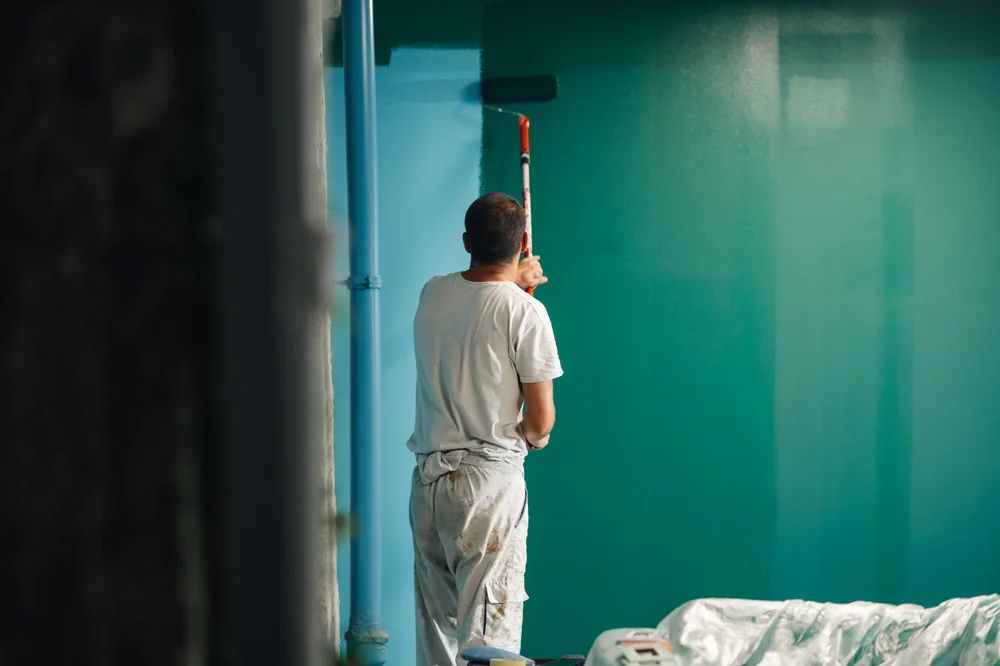
Teal is having a significant moment, particularly the deeper, more complex versions that read as both blue and green depending on light conditions. In a two-story foyer with windows that change throughout the day, teal creates visual interest without overwhelming the space. It’s bold enough to make a statement but grounded enough to live with long-term.
Olive green stands out as another 2026 favorite, especially in homes where you want to bring in natural connections without going full forest green. It’s a grounding neutral that isn’t boring—it feels cozy in winter and comes alive in spring and fall when natural light is at its best. For Wayland homes surrounded by preserved green spaces and mature trees, olive creates a seamless indoor-outdoor transition.
The warm neutral trend continues evolving with more depth than the beiges and taupes of previous years. Think colors with names like “warm eucalyptus” and “gypsum rose”—neutrals with enough pigment to stand up to the scale of a high-ceiling room without disappearing into blandness. These work particularly well if you’re not ready to commit to color but want something more interesting than builder white.
Icy blues remain popular for spaces where you want to add light and airiness without going stark white. In a high-ceiling room with good natural light, a pale blue can make the space feel even more open while adding just enough color to give the room personality. It’s a particularly smart choice for north-facing rooms that tend to feel cooler anyway.
Here’s what matters more than the specific color: application quality. High ceilings show imperfections more readily than standard walls. Streaks, missed spots, and uneven coverage are visible from multiple angles and distances. We work in consistent sections, maintain a wet edge, and use techniques like the “W” or “M” pattern that ensure even distribution without lap marks or visible seams.
Professional Techniques for Flawless Results on Tall Walls and Ceilings
The difference between amateur results and professional quality on high ceilings comes down to technique, not talent. But technique requires knowledge that most homeowners simply don’t have because they’re not painting 15-foot walls every week.
Proper preparation sounds obvious until you’re standing on scaffolding realizing you forgot to clean cobwebs from the crown molding or remove that light fixture you’re now painting around awkwardly. We prep high-ceiling rooms systematically—we remove or cover light fixtures, protect floors with overlapping drop cloths, tape down extension cords to prevent tripping hazards, and set up bright work lights so we can actually see our work.
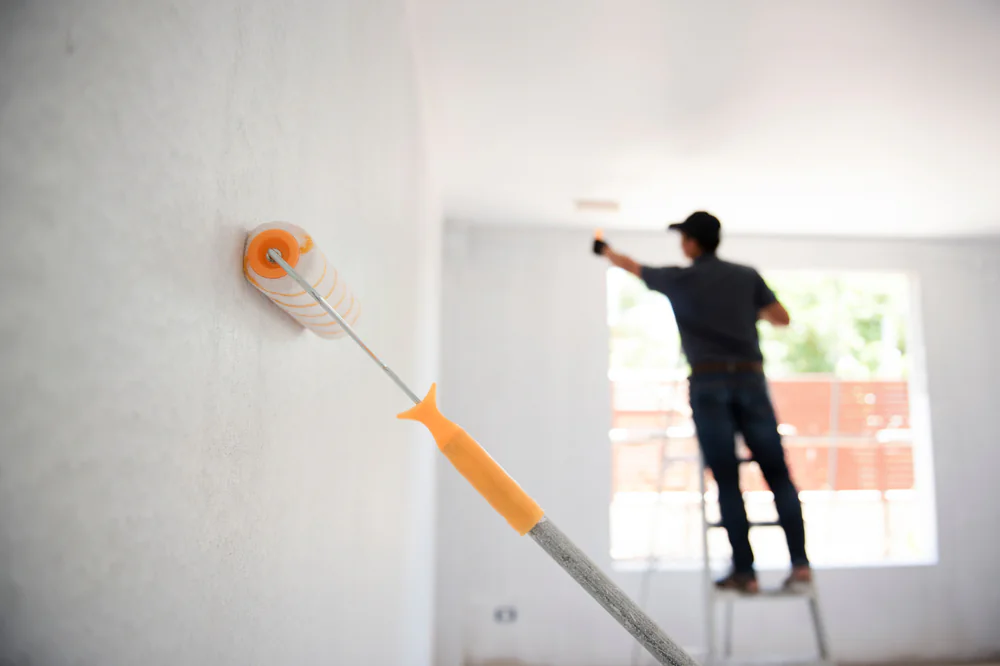
Cutting in—painting the edges where walls meet ceilings or where walls meet trim—is where most DIY jobs fall apart on high ceilings. You’re working at an awkward angle, trying to maintain a steady hand while your arms are fatiguing. We use extension pole adapters that let us cut in from a stable position rather than overreaching from a ladder. We also strategically choose paint colors close to the ceiling color so any imperfect edges are less noticeable from 15 feet below.
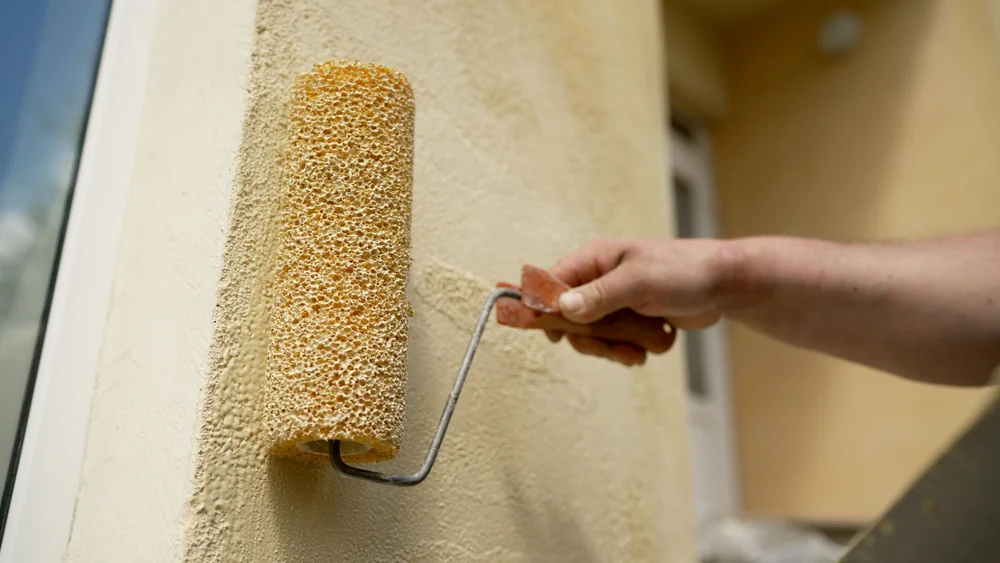
The actual rolling technique matters more than you’d expect. Rolling perpendicular to the primary light source helps minimize the appearance of roller marks. Working in small sections and maintaining a wet edge prevents those visible lines where one section dried before you reached the next. Avoiding overloading the roller prevents drips, which are especially problematic on high walls because by the time you notice them, they’ve run down several feet.
For rooms with vaulted ceilings or angled walls, the approach changes again. You’re not just dealing with height—you’re dealing with geometry that makes it harder to position equipment and maintain consistent coverage. This is where our experience makes the biggest difference. When you’ve completed dozens of cathedral ceilings, you know how to angle the roller, where to position the scaffold, and how to blend sections that meet at odd angles.
Temperature and humidity affect paint drying, and in high-ceiling rooms, these factors can vary significantly between floor level and the ceiling. We account for this by adjusting our technique and timing. We might work more slowly to ensure even drying, or we might use specific primers that improve adhesion in challenging conditions.
The final detail that separates professional work from DIY attempts is the inspection process. After painting, we walk through the space from multiple vantage points—from the ground floor, from the stairs, from the second-floor landing—looking for any missed spots, drips, or uneven coverage. We address these issues while the paint is still workable, not three days later when you finally notice them from the right angle.
Making Smart Decisions About High-Ceiling Painting in Your Luxury Home
High-ceiling rooms define luxury homes in Weston and Wayland. They create space, drama, and architectural interest that sets these properties apart from standard construction. But maintaining them—specifically, painting them—requires more than enthusiasm and a free weekend.
The seven tips covered here represent what we do differently: we understand safety requirements, use specialized equipment, choose colors that work with the space’s proportions and light, and apply techniques refined over thousands of hours working at height. This isn’t knowledge you can absorb from a YouTube video Friday night and successfully execute by Sunday afternoon.
If you’re looking at your two-story foyer or vaulted living room wondering whether to tackle it yourself, consider what your time and safety are worth. Then consider what it costs to fix a DIY job that didn’t go as planned—or worse, resulted in injury. For most homeowners in Weston and Wayland, bringing in experienced professional residential painters makes more sense than the alternative and results in a finish that does justice to your home’s architectural beauty.