
Hear from Our Customers
You’re not just looking at dirt on your driveway or green film creeping up your siding. You’re looking at damage that compounds every season you wait.
Massachusetts winters are brutal on exterior surfaces. Water seeps into small cracks, freezes, expands, and turns minor wear into real problems. Add spring pollen, summer humidity that feeds algae growth, and fall storms that deposit organic debris everywhere—your property takes a beating year-round.
Professional pressure washing removes what’s actively breaking down your surfaces. Hot water cuts through oil stains and road salt residue on driveways and walkways. Soft washing eliminates algae, moss, and lichen from siding and roofs without the surface damage that high pressure causes on delicate materials.
The difference shows up in how long your exterior lasts and how much less you spend on premature replacements. Clean surfaces shed water properly. They don’t trap moisture that accelerates rot in wood or creates freeze-thaw damage in concrete and masonry.
We’ve spent more than ten years working on homes and commercial properties throughout Whitneys and surrounding Massachusetts communities. We’re a family-run operation, which means you’re not getting a rotating crew of strangers—you’re getting people who care about the work and the reputation attached to it.
We know which elevations around here catch green film first after a wet spring. We know which walls collect salt haze after nor’easters. And we know that vinyl siding, painted wood, cedar shingles, and brick all need different approaches if you want them clean without causing damage.
Our approach centers on two things: using the right method for each surface, and using products that won’t harm your family, pets, or landscaping. Non-toxic and eco-friendly cleaning solutions do the job without leaving behind residue or requiring you to keep kids and animals inside for hours after we’re done.
We start with a walkthrough of your property to assess what needs cleaning and identify any areas that require special attention. Different surfaces need different treatment—that’s not upselling, that’s physics.
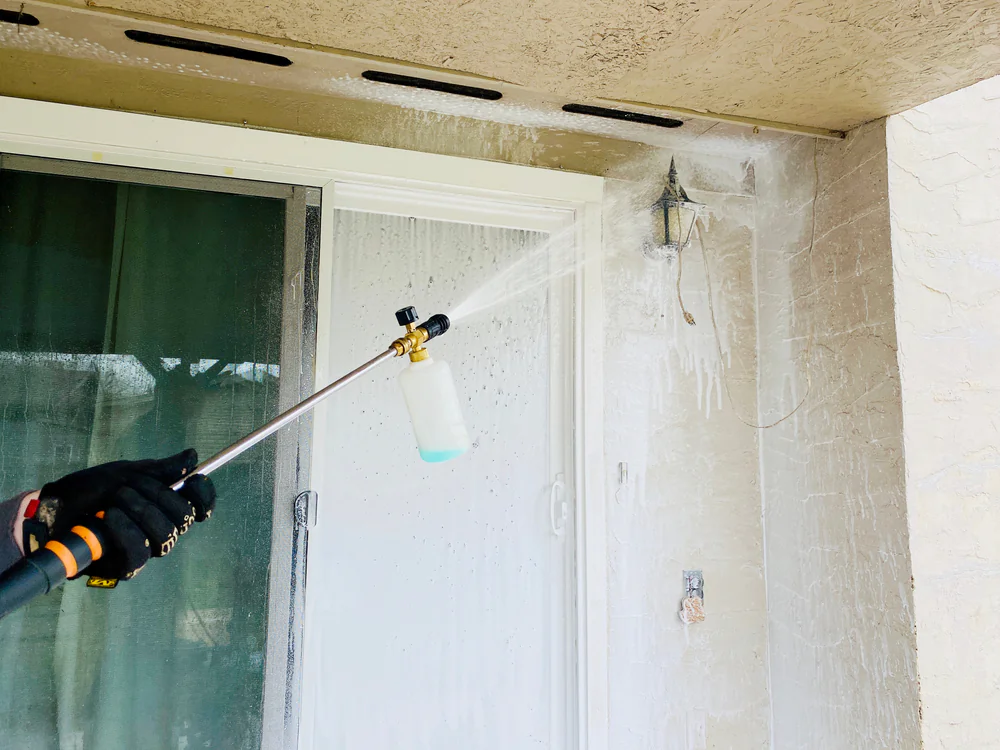
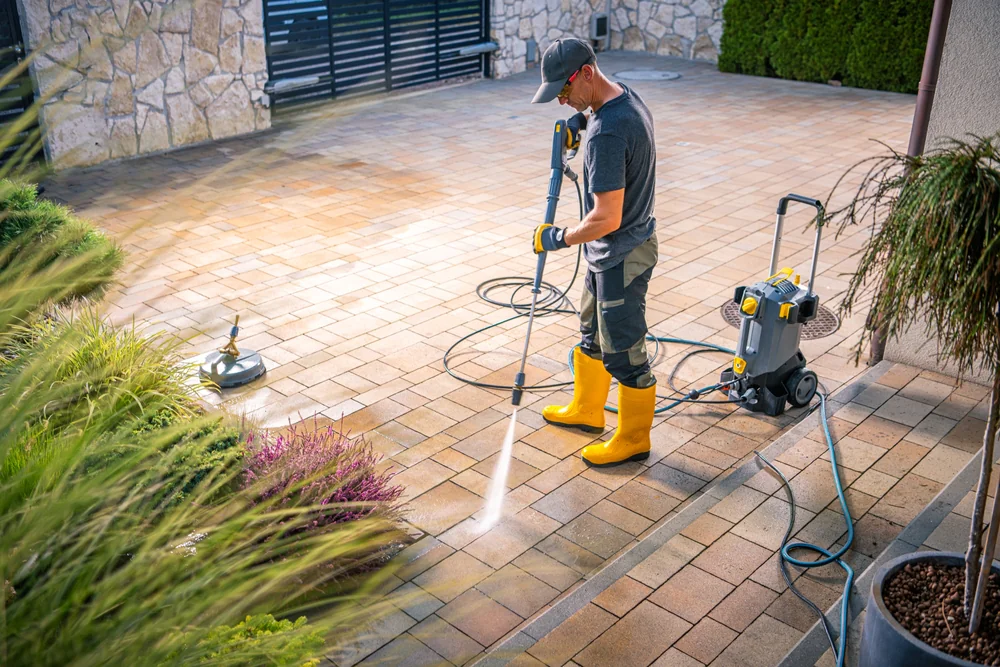
For hard surfaces like driveways, walkways, and concrete patios, we use hot water pressure washing. The heat breaks down oil, grease, and salt residue that cold water just pushes around. For siding, roofs, fences, and decks, we use soft washing—lower pressure combined with biodegradable solutions that kill organic growth at the root without blasting away paint or etching wood grain.
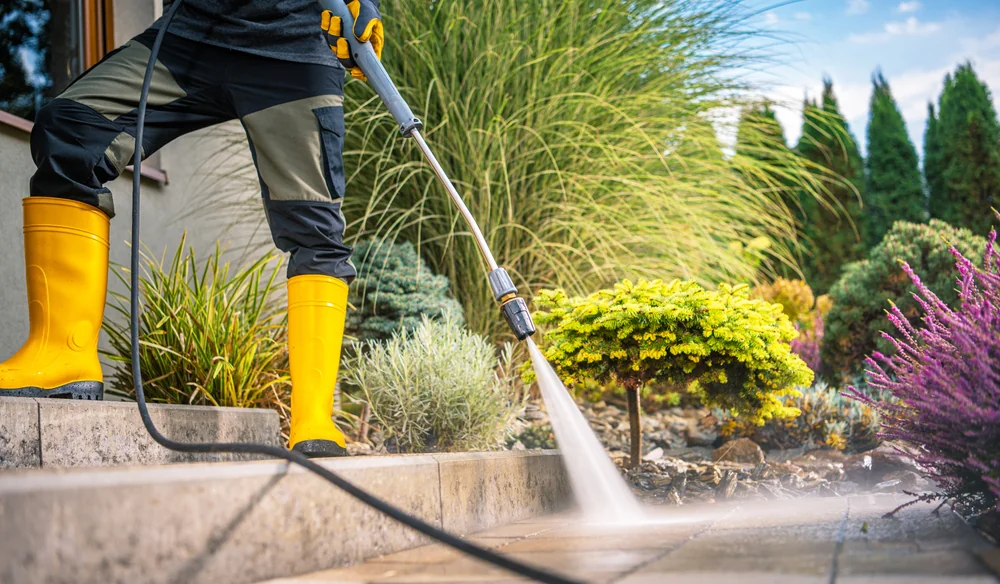
We protect your landscaping, cover electrical fixtures, and pre-wet any plants near the work area. Then we apply cleaning solution where needed, let it work for the right amount of time, and rinse everything thoroughly. The final step is a walkthrough with you to make sure every surface meets expectations.
You’ll get a text reminder 24 hours before we arrive and another an hour out. We show up on time, work efficiently, and leave your property cleaner than it’s been in years—without the harsh chemical smell some companies leave behind.
Ready to get started?
Our pressure washing services cover the full exterior of residential and commercial properties in Whitneys. That includes house siding, roofs, driveways, walkways, decks, fences, patios, retaining walls, and commercial building facades.
We also handle specialty cleaning: graffiti removal, gum removal from sidewalks, and restoration work on weathered decks and fences that need more than surface cleaning. If you’re preparing to paint or stain, proper pressure washing is the foundation that determines how long that new finish will last.
Massachusetts properties face specific challenges. Road salt doesn’t just disappear when snow melts—it sits on concrete and eats away at the surface. Algae thrives in our humid summers, especially on north-facing walls that don’t get direct sun. Moss and lichen take hold on roofs and can shorten their lifespan significantly if left unchecked.
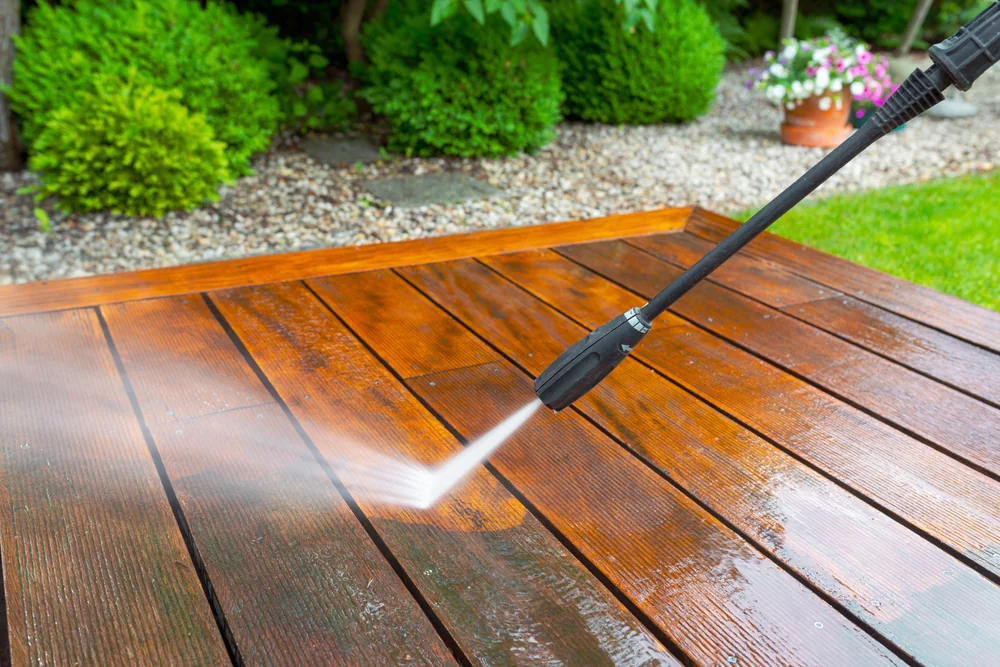
We match our approach to what your property actually needs. Painted surfaces get soft washing to preserve the finish. Asphalt driveways get treated differently than concrete. Wood decks get cleaned at pressures that remove grime without fuzzing up the grain or forcing water deep into the boards where it causes swelling and rot.

Pressure washing uses high-pressure water—typically 2,000 to 3,000 PSI or more—to blast away dirt, grime, and stains from hard surfaces like concrete, brick, and stone. It’s effective for driveways, walkways, and heavily soiled areas where the surface can handle the force.
Soft washing uses significantly lower pressure—usually under 500 PSI—combined with biodegradable cleaning solutions that do the actual work of breaking down organic growth like algae, moss, mildew, and lichen. The low pressure rinses away the dead growth without damaging delicate surfaces.
For your home’s siding, roof, painted wood, or composite decking, soft washing is the right choice. High pressure can strip paint, etch wood, crack vinyl, force water under siding, and knock granules off asphalt shingles. Soft washing gets these surfaces just as clean—often cleaner—because the cleaning solution kills growth at the root instead of just blasting it off the surface where it grows back quickly.
Most homes in Whitneys benefit from professional cleaning every 18 to 24 months, but the right timing depends on your specific property and what it’s exposed to.
North-facing walls and shaded areas collect algae and mildew faster because they stay damp longer. If you have mature trees overhead, you’ll see more organic debris, pollen, and moisture retention that speeds up growth. Properties near roads with heavy winter salt use often need driveway and walkway cleaning annually to prevent salt damage to concrete and stone.
You’ll know it’s time when you see green or black streaks on siding, dark stains spreading across your roof, or when your driveway and walkways look perpetually dirty even after rain. Waiting too long means you’re not just dealing with cosmetic issues—you’re letting organic growth and contaminants actively break down your exterior surfaces. Regular cleaning is maintenance that extends the life of expensive materials like siding, roofing, and decking.
It can—if someone uses the wrong pressure, wrong angle, or wrong technique for the material they’re cleaning. That’s why experience and proper equipment matter.
Vinyl siding can crack or get knocked loose by high pressure applied at the wrong angle. Wood siding can splinter and absorb too much water if pressure is too high. Asphalt shingles lose protective granules when hit with high-pressure spray, which shortens roof life. Painted surfaces can get stripped down to bare wood or substrate if the operator isn’t careful.
We avoid these problems by using soft washing on all delicate surfaces. Low pressure plus effective cleaning solutions means your siding, roof, and painted surfaces get thoroughly clean without any of the damage risks that come with blasting everything at maximum pressure. For roofs specifically, we use solutions designed to kill algae and moss without requiring any pressure that could compromise shingle integrity. The result is a roof that looks new again and actually lasts longer because we’ve removed the organic growth that traps moisture and accelerates deterioration.
When done correctly with the right products, yes. When done carelessly with harsh chemicals, no.
We use biodegradable, eco-friendly cleaning solutions that break down naturally and won’t harm plants, grass, pets, or the local water supply. Before we start, we pre-wet landscaping near the work area and cover delicate plants if needed. We also rinse thoroughly so no cleaning residue is left behind.
Some companies use bleach-heavy solutions or harsh chemicals that can burn plants, leave toxic residue, and create strong fumes that linger for hours. You shouldn’t have to keep your kids and pets inside all day or worry about your shrubs turning brown after a cleaning.
Our approach focuses on effective cleaning that’s safe for everyone and everything around your property. You won’t smell harsh chemicals after we’re done. Your landscaping stays healthy. And you can let pets and children back outside as soon as surfaces are dry—usually within a few hours depending on weather.
Cost depends on the size of your property, which surfaces need cleaning, and how much buildup we’re dealing with. A typical single-family home exterior cleaning—siding, walkways, and driveway—usually runs between $300 and $600. Larger homes, additional services like deck or roof cleaning, or properties that haven’t been cleaned in years will cost more.
We provide free estimates so you know exactly what you’re paying before any work starts. During the estimate, we’ll walk your property, assess what needs attention, and give you a detailed quote based on the actual work required—not a generic price range.
The value isn’t just in how your property looks afterward. Regular professional cleaning prevents damage that costs significantly more to repair or replace. Removing algae from your roof can extend its life by years. Cleaning salt and oil stains from your driveway prevents surface breakdown that leads to cracking and costly resurfacing. You’re investing in maintenance that protects what you’ve already spent on your property.
Yes, though success depends on how old the stain is, what type of surface we’re working with, and how deep the oil has penetrated.
Fresh oil stains respond well to hot water pressure washing combined with degreasers designed for concrete and asphalt. The heat helps break down the oil while the pressure lifts it out of the porous surface. Older stains that have been sitting for months or years are more challenging because the oil has had time to soak deeper into the material, but we can still significantly lighten them and often remove them completely.
Concrete driveways generally respond better to stain removal than asphalt because the surface is harder and less porous. Asphalt is petroleum-based itself, so oil can penetrate more deeply. We adjust our approach based on your specific surface and the age of the staining.
If you’ve got a vehicle that leaks or you’ve had a recent spill, getting it cleaned sooner rather than later gives you the best results. But even long-standing stains usually improve dramatically with the right combination of heat, pressure, and cleaning solution.
Other Services we provide in Whitneys
Ready for a Sparkling Clean Home?
Take the first step towards a cleaner, healthier home. Book your cleaning service with Clarita’s Cleaning today!
Clarita's Cleaning
Company
Support
Useful Links